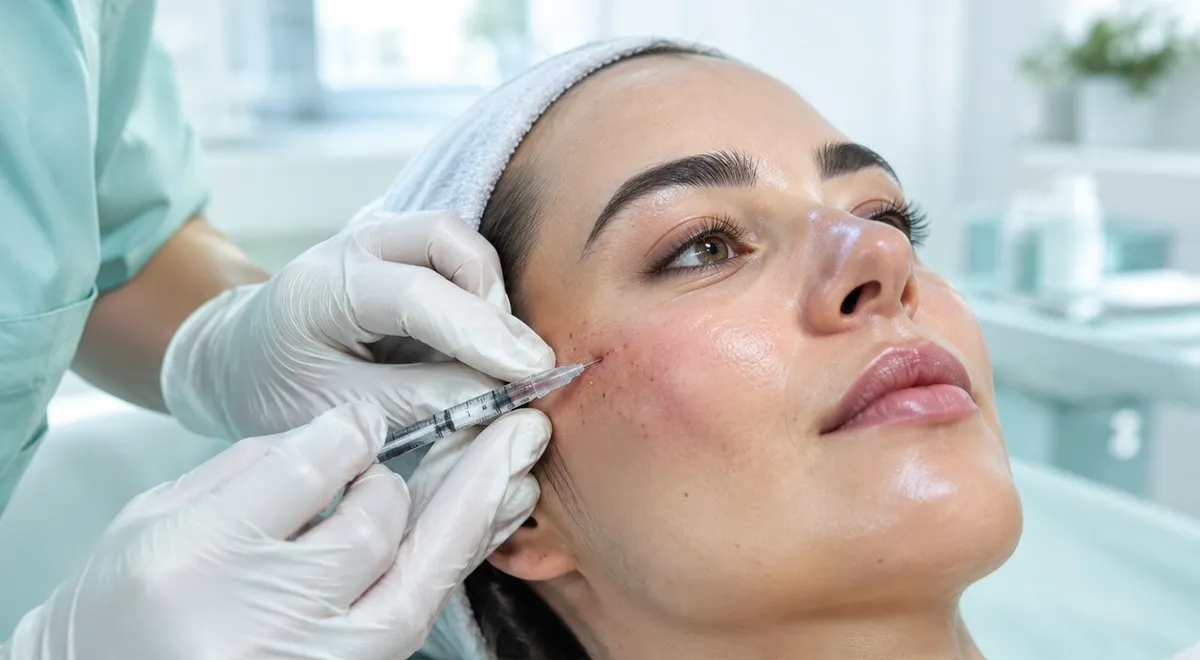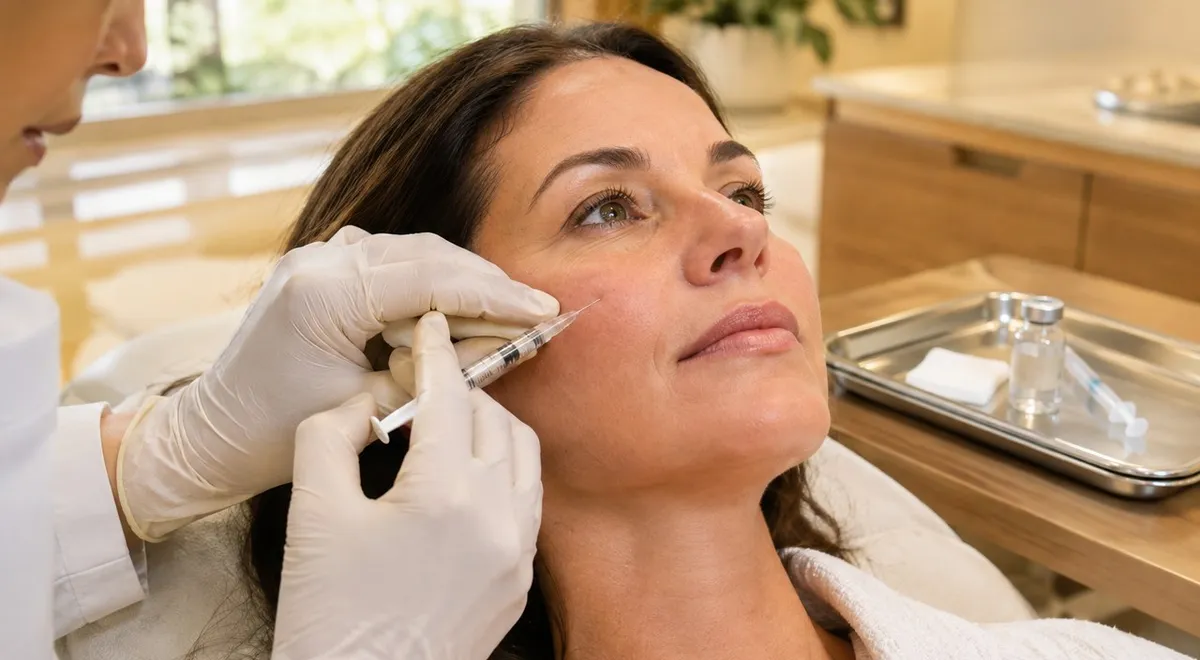
Provider performing a Sculptra injection into a client’s cheek, with a vial on the tray nearby
Reviewed by Dr. Narbeh Tovmassian, MD, FACPWritten by Ani Mardirosian


Sculptra in Los Angeles: Month-by-Month Results Timeline, How Many Vials & Who Is a Candidate

Sculptra works slowly by design. It is an injectable poly-L-lactic acid that stimulates your own collagen, so the result builds over several weeks and months rather than appearing on the day of treatment. The FDA label allows up to four sessions in a single regimen, the number of vials is a clinical decision that depends on your face, and the best candidates are healthy adults who want gradual, natural-looking support.

At Elevate Aesthetics LA, Sculptra treatments are planned as a short series rather than a single visit. This guide walks through what you can expect at each stage, explains how the vial question really works, and covers who is a good candidate and who should check with a clinician first.
What Sculptra Is and What It Is Approved For

Unlike hyaluronic acid fillers, which add volume immediately, Sculptra is a collagen stimulator. According to the FDA instructions for use, it provides a gradual correction of contour deficiencies over several weeks rather than an instant change.

The labeled uses for healthy, immune-competent adults are correcting shallow to deep nasolabial fold contour deficiencies and other facial wrinkles, and correcting fine lines and wrinkles in the cheek region. A separate indication covers facial fat loss in people with HIV. Other uses, such as treating areas of the face beyond these or areas of the body, are off-label, and your provider should tell you plainly when a plan goes beyond the label.

If your main goal is immediate shape or volume in a specific spot, a hyaluronic acid product may be the better fit, and our guide to dermal filler options explains how those differ. Many patients use both for different reasons.

Your Sculptra Results Timeline, Month by Month

The timeline below combines the FDA label with what Elevate describes on its Sculptra page, where treatment is typically 2 to 3 sessions spaced 4 to 6 weeks apart with results peaking at 4 to 6 months. Individual timing varies.

Days 1 to 7: swelling and massage. Expect tenderness, swelling, redness and sometimes bruising. The label asks providers to massage the area for at least two minutes at the end of the visit, and recommends that patients massage the treated area for five minutes, five times a day, for five days, using a moisturizer. This is often called the 5-5-5 routine, and following your clinic's instructions matters. Minimize sun and UV exposure and extreme temperatures until swelling and redness settle.

Weeks 2 to 4: the first impression. Swelling fades. Any fullness you notice early can come from the liquid used to reconstitute the product and is temporary, so it is not the final result. The label sets a minimum gap between sessions of three weeks for nasolabial folds and four weeks for the cheek region.

Months 2 to 3: gradual change. This is the quiet phase. Collagen is building, and changes are subtle enough that many patients feel unsure. Most good treatment plans schedule a follow-up session here rather than judging the result too early.

Months 4 to 6: the peak. Elevate's page describes the peak at about four to six months. Skin often looks smoother and facial contours look more supported, though results vary between patients.

Months 6 to 12 and beyond. Results gradually soften as the body's response settles. In the FDA documentation, follow-up in studies extended from 13 to 25 months depending on the indication, and effects were maintained through 24 months in one cheek study. Elevate's page describes results lasting two years or more for many patients. The label also notes that safety and effectiveness beyond three years have not been investigated in clinical trials, so no one can promise a specific duration.

How Many Vials of Sculptra Will You Need?

This is the most common question, and the honest answer is that the label gives no single number. Vial count depends on the treatment area, the depth of the concern, your anatomy and how many sessions the plan includes.

What the label does offer is context from its clinical studies. In the nasolabial fold study, subjects received a maximum of one vial per session. In the cheek study, subjects could receive up to two vials per session, with a maximum of one vial per side. For facial fat loss in HIV, treating an entire cheek typically took about one vial per cheek per session. These are study limits, not a recommendation for your face.

There are also practical rules. Sculptra vials are single-patient, single-session products, and any product left over after the session is discarded. That is one reason a clinic plans vials per session rather than selling a number in advance, and why a quote that promises a fixed total at the first visit deserves a follow-up question.

A good consultation will map the areas, explain how many sessions are planned, and give you a cost per visit. See the Elevate pricing page for what is listed online, or ask the clinic for a quote based on your plan.

Who Is a Good Sculptra Candidate?

Sculptra tends to suit people who want gradual, natural restoration of support rather than a dramatic same-day change. Good candidates are typically adults with early to moderate volume loss in the cheek area or lower face, soft nasolabial folds or skin that looks thin and crepey, who are comfortable waiting for results and attending a short series of visits.

It is a less natural fit for someone who needs one specific spot corrected immediately, or who wants a result before an event in a few weeks. It also isn't a replacement for treatments that target different problems. If your concern is skin tightening, a technology like Morpheus8 skin tightening addresses a different layer of the skin, and some patients combine the two with careful timing from their provider.

Realistic expectations matter most. Sculptra supports your skin and volume gradually, so photos taken before treatment and at each follow-up are the best way to see change that is easy to miss in the mirror.

Who Should Wait or Check First

The label identifies several groups for whom Sculptra needs extra care or is not recommended. Review these with a clinician before booking:

  • Allergy history: The label lists hypersensitivity to a component, a history of anaphylaxis or multiple severe allergies, and a lidocaine allergy when lidocaine is mixed in, as contraindications.
  • Keloid or scarring tendency: A known history of or susceptibility to keloids or hypertrophic scarring is a listed contraindication.
  • Active skin problems: Treatment in an area with active inflammation or infection, such as cysts, rashes or hives, should be deferred until it resolves.
  • Pregnancy, breastfeeding or under 18: The label states safety and effectiveness have not been evaluated in these groups.
  • Bleeding disorders or blood thinners: These can increase bruising and bleeding at the injection site.
  • Other procedures: If you plan laser treatment, a chemical peel or another procedure that triggers a skin response, ask about timing, because the label warns of a possible inflammatory reaction at the implant site.
  • Areas not studied: The label states that safety in the lips has not been evaluated, and Sculptra should not be injected into the red part of the lip. Periorbital (around-the-eye) injection has not been studied, and published literature reports a higher risk of nodules and papules there.

The most important side effect to understand is delayed lumps. The label reports that papules and nodules can appear days to months after injection, and in its data the median time to onset after the first session was about 55 days for papules and 160 days for nodules. Many are small, painless and resolve on their own, but some take months, so tell your clinic if you feel a lump instead of waiting and hoping. As with any injectable, blood vessel injury is a rare but serious risk. Sudden severe pain, skin that turns pale or dusky, or any vision change requires emergency care immediately.

What a Sculptra Plan Looks Like at Elevate

A typical plan starts with a consultation to review your goals, history and areas of concern, followed by a first session and then follow-up sessions spaced according to your plan. On its Sculptra page, Elevate describes two to three sessions spaced about four to six weeks apart, which sits within the label's minimum spacing of three to four weeks and its limit of up to four sessions in a regimen.

Between visits, do the massage routine your provider gives you, avoid sun and heat exposure while swelling settles, and take photos in consistent lighting. If you are also interested in skin quality, ask whether a SkinVive skin booster fits into your plan alongside collagen stimulation, since the two address different goals.

Frequently Asked Questions

Sculptra builds gradually, so most patients notice subtle change over several weeks and the full effect at about four to six months, according to Elevate's Sculptra page. Early fullness in the first days is mostly temporary. Judging results too early is the most common reason people feel unsure at the one-month mark.

The FDA label allows up to four sessions in one regimen, spaced at least three to four weeks apart depending on the area. Elevate describes two to three sessions about four to six weeks apart. Your provider sets the number based on your starting point and goals, then adjusts after each visit.

There is no fixed label number for a face. In the label's studies, nasolabial fold subjects received up to one vial per session and cheek subjects up to two vials per session. Your provider decides based on area and goals. Each vial is single-patient and single-session, so leftover product is discarded.

Study follow-up in the FDA documentation ranged from 13 to 25 months depending on the indication, and Elevate describes results of two years or more. The label notes that effectiveness beyond three years has not been studied. Individual duration varies, so no one can promise a specific length.

Yes. Common effects include swelling, tenderness, redness, bruising and small lumps under the skin. Delayed nodules or papules can appear days to months after treatment. Contact your clinic if you notice a lump, and seek emergency care for severe pain, pale or dusky skin or vision changes.

Cost depends on the number of vials and sessions in your plan. Because vials are single-session, pricing is usually quoted per session or per vial. Check the Elevate pricing page for what is listed, or contact the clinic for a quote based on your plan.

Ready to see whether gradual collagen support fits your goals? Book a Sculptra consultation at Elevate Aesthetics LA to map your areas, sessions and timeline with a licensed provider.

Elevate Aesthetics
509 1/2 E. Broadway, Glendale, CA 91205
4.95 stars
Opening Hours
Monday - Thursday10:00 AM - 5:00 PM
Friday10:00 AM - 4:00 PM
Saturday9:00 AM - 2:00 PM
SundayClosed
Newsletter background

Stay In The Loop

Get updates on new treatments, promotions, and clinic news.