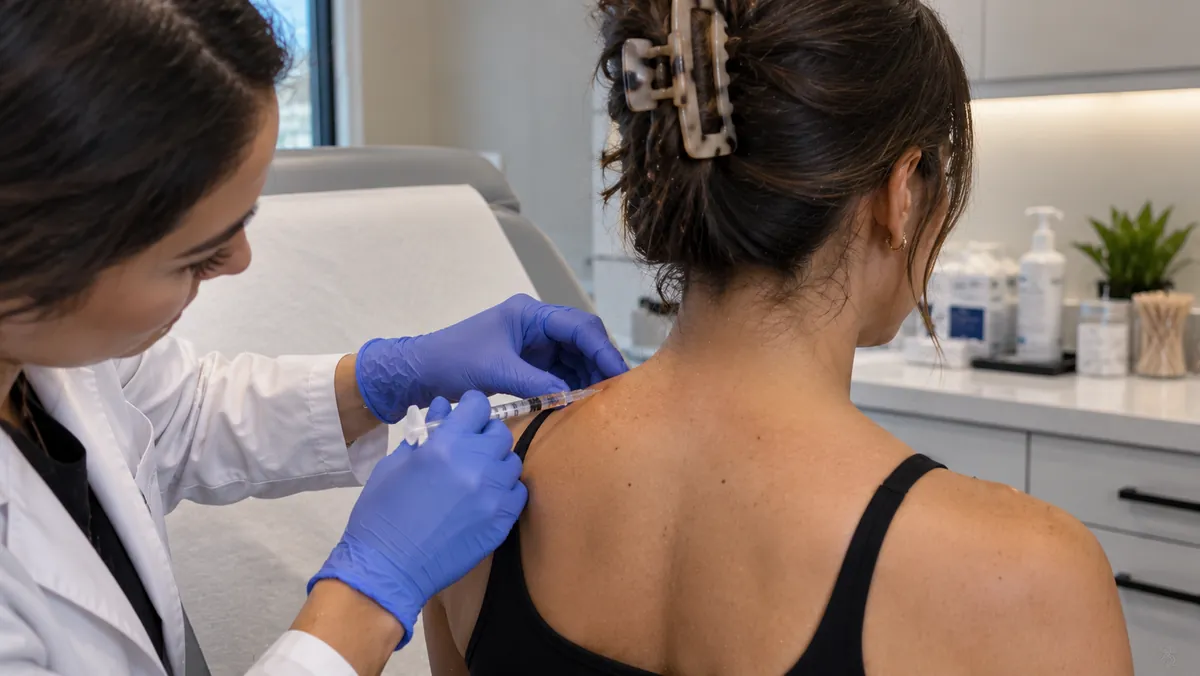


Trap tox (Barbie Botox) treatment in Glendale, showing a clinician administering an injection into the trapezius muscle
Reviewed by Dr. Narbeh Tovmassian, MD, FACPWritten by Ani Mardirosian

Trap Tox in Glendale: What Barbie Botox Does, Who It's For & What to Expect After Treatment

Trap tox, widely known as Barbie Botox after the treatment's rise on social media, involves placing Botox into the trapezius muscles rather than the face. The visual result is a longer-looking neck and a softer shoulder line. The functional result, for many patients, is meaningful relief from the chronic tension and headaches that build up in those same muscles.

This is not a purely aesthetic trend dressed up in medical language. Injecting the trapezius with botulinum toxin has genuine clinical applications that predate the Barbie Botox name by years. What changed recently is that patients began noticing how the functional treatment also changed how their neck and shoulders looked, and the aesthetic use followed.

If you have been wondering whether trap tox is worth the appointment, here is a clear breakdown of what it does, who it works for, and what the full experience looks like from injection day through peak results.

What Is Trap Tox and Why Are People Getting It?

The trapezius is a large muscle that runs from the base of your skull down through your neck and out across your upper back. It controls head movement, shoulder elevation, and a significant portion of the tension most people carry from stress, screen time, or physical work.

When Botox is injected into the trapezius, the muscle relaxes. Visually, a bulky or raised trapezius softens and drops, which creates the appearance of a longer, more elongated neck and a narrower shoulder line. That aesthetic shift is what the Barbie Botox name refers to.

The treatment is offered alongside other injectable treatments for patients who want to address both how they look and how they feel, and it works well as a standalone appointment or combined with facial injectables.

The Functional Case: Pain and Tension Relief

The aesthetic result is what gets most attention online, but a large portion of patients come to trap tox for relief rather than appearance. Chronic trapezius tension is one of the most common sources of referred pain in the upper body. It contributes to neck stiffness, upper back tightness, and tension-type headaches that run from the shoulders to the base of the skull.

The American Migraine Foundation recognizes that muscle tension in the trapezius is a known trigger for both tension headaches and migraines, and botulinum toxin injections into the trapezius have been studied as a management approach for patients who do not respond well to other treatments.

Patients who work at desks, drive long distances, exercise heavily, or carry chronic physical or psychological stress in their shoulders are often the best candidates for the functional side of this treatment.

Who Is a Good Candidate for Trap Tox?

Most healthy adults are candidates for trap tox, but a few specific profiles see the clearest results.

You are likely a strong candidate if you have a visually prominent or bulky trapezius you want to reduce. Genetics, athletic training, or repeated strain can make the trapezius thicker over time. Once the muscle develops that size, exercise will not reduce it. Botox is the only non-surgical way to create a visible change.

You are also a strong candidate if you carry significant tension in your upper back and shoulders. Patients who describe feeling like they are shrugging constantly, or who get regular headaches originating at the base of the skull or behind the eyes, often find that trap tox provides more relief than massage, chiropractic care, or stretching on its own.

If you are not sure which category you fall into, both are valid reasons to book a consultation. Aesthetic and functional benefits often overlap, and many patients who come in for one end up appreciating both.

How Many Units Does Trap Tox Require?

The trapezius is a large muscle. That size difference between the face and the trapezius is why the unit count for this treatment is higher than what patients are used to seeing for facial Botox.

Most patients need between 25 and 50 units per side, for a total of 50 to 100 units across both trapezius muscles. The right number for any individual depends on the size of the muscle, the degree of tension present, and whether the goal is primarily aesthetic, primarily functional, or both.

Larger or more developed muscles typically require higher unit counts to achieve visible softening. Patients who are treating tension rather than bulk may see relief at lower doses. A trained injector will assess both sides at your appointment and recommend a dose based on what they observe.

The American Society of Plastic Surgeons notes that dosing for large muscle groups like the trapezius is more variable than facial dosing, which is one reason this treatment is best performed by someone with direct experience in the area rather than a general injector who has only worked with facial muscles.

What Does the Injection Process Feel Like?

Trap tox appointments are straightforward. Your provider will identify the treatment zones across your trapezius, which typically involves several injection points on each side. Most patients receive between four and eight injections per side.

The trapezius sits close to the surface in most areas, so injections are not especially deep. The sensation is similar to a small pinch or brief sting at each point. Patients who are already familiar with facial Botox often find trap tox easier because there is less sensitivity in the shoulder and upper back area than around the eyes, forehead, or lips.

No numbing cream is typically needed, but it can be applied beforehand if you prefer. The whole appointment, including consultation and injections, usually takes 20 to 30 minutes.

When Will You See Results and How Long Do They Last?

Results from trap tox follow a similar timeline to facial Botox. Most patients notice the muscle beginning to relax within five to seven days. The full aesthetic and functional effect typically peaks around four weeks after the appointment.

Functional relief, if that was part of your goal, often arrives before the aesthetic change. Patients who get trap tox for tension headaches or chronic shoulder tightness frequently report a noticeable change in how they feel within the first week, even before the muscle visually softens.

Results last an average of three to four months for most patients. Some patients with severe tension or heavily developed muscles find that the first treatment lasts on the shorter end of that range, while repeat treatments over time can extend the duration as the muscle gradually weakens and reduces in size.

What to Avoid After Treatment

Recovery from trap tox is minimal. You can return to most of your regular activities the same day. A few basic guidelines apply for the first 24 hours.

Avoid vigorous upper body exercise immediately after the appointment. Repeated contraction of the trapezius right after injection can disperse the Botox before it fully binds to the muscle fibers. Also avoid rubbing or massaging the injection sites, and skip any heat exposure such as saunas or hot tubs on the day of the appointment.

Sleeping position does not require adjustment the way it might after facial injectables. The injection sites are accessible from any sleep position without pressure on the treated area.

How Much Does Trap Tox Cost in Glendale?

Trap tox is priced by unit at most practices, so the total cost depends on how many units your provider recommends. At Elevate Aesthetics LA, current pricing and any available promotions are listed on the pricing page, and you can also check the specials page for any active offers on injectables.

As a general reference, a typical treatment of 50 to 100 total units will cost more than a standard facial Botox appointment, which patients should factor into their planning. Practices that offer package pricing or loyalty programs can make repeat treatments more accessible over time.

Frequently Asked Questions

Yes. Barbie Botox is the popular name for trapezius Botox, which became widely used after the Barbie film brought the elongated neck and narrow shoulder look into mainstream conversation. The treatment itself uses the same botulinum toxin as facial Botox, just injected into the trapezius muscles rather than facial muscles. The clinical application of trapezius Botox for pain management predates the Barbie Botox name by many years.

Some temporary reduction in upper body strength is possible, particularly for exercises that heavily recruit the trapezius, such as shrugs, rows, or overhead pressing. Most patients report that everyday activities are not affected. Athletes who train the upper back heavily may notice some change during the peak effect period. This is temporary and resolves as the Botox wears off. Discuss your training schedule with your provider when planning the timing of your appointment.

Massage and physical therapy work with the muscle externally and can provide temporary relief. Trap tox works by blocking the nerve signal that tells the muscle to contract, which reduces baseline tension at the source rather than managing its effects after the fact. Patients who have tried massage, stretching, and physical therapy without lasting relief often find that trap tox provides a different kind of improvement because it addresses the muscle contraction itself.

Yes. Many patients combine trap tox with facial injectables such as forehead Botox, brow Botox, or neurotoxin for the neck and jawline at the same appointment. Your provider can assess your goals and recommend what makes sense to treat together versus at separate visits. There is no medical reason trap tox and facial injectables cannot be done on the same day.

Trap tox does not produce permanent results from a single treatment, but repeated treatments over time can lead to lasting muscle reduction. When the trapezius is consistently kept in a relaxed state across multiple treatment cycles, the muscle can atrophy and become permanently smaller, similar to what happens to any muscle that is not regularly used. Patients who are treating for aesthetics and want long-term reduction typically begin to notice that the muscle stays smaller with each successive round of treatment.

Book a Consultation

If trap tox sounds like it fits what you are looking for, the next step is a short consultation to assess your trapezius and talk through your goals. Contact Elevate Aesthetics LA to schedule.

Elevate Aesthetics
509 1/2 E. Broadway, Glendale, CA 91205
4.95 stars
Opening Hours
Monday - Thursday10:00 AM - 5:00 PM
Friday10:00 AM - 4:00 PM
Saturday9:00 AM - 2:00 PM
SundayClosed
Newsletter background

Stay In The Loop

Get updates on new treatments, promotions, and clinic news.