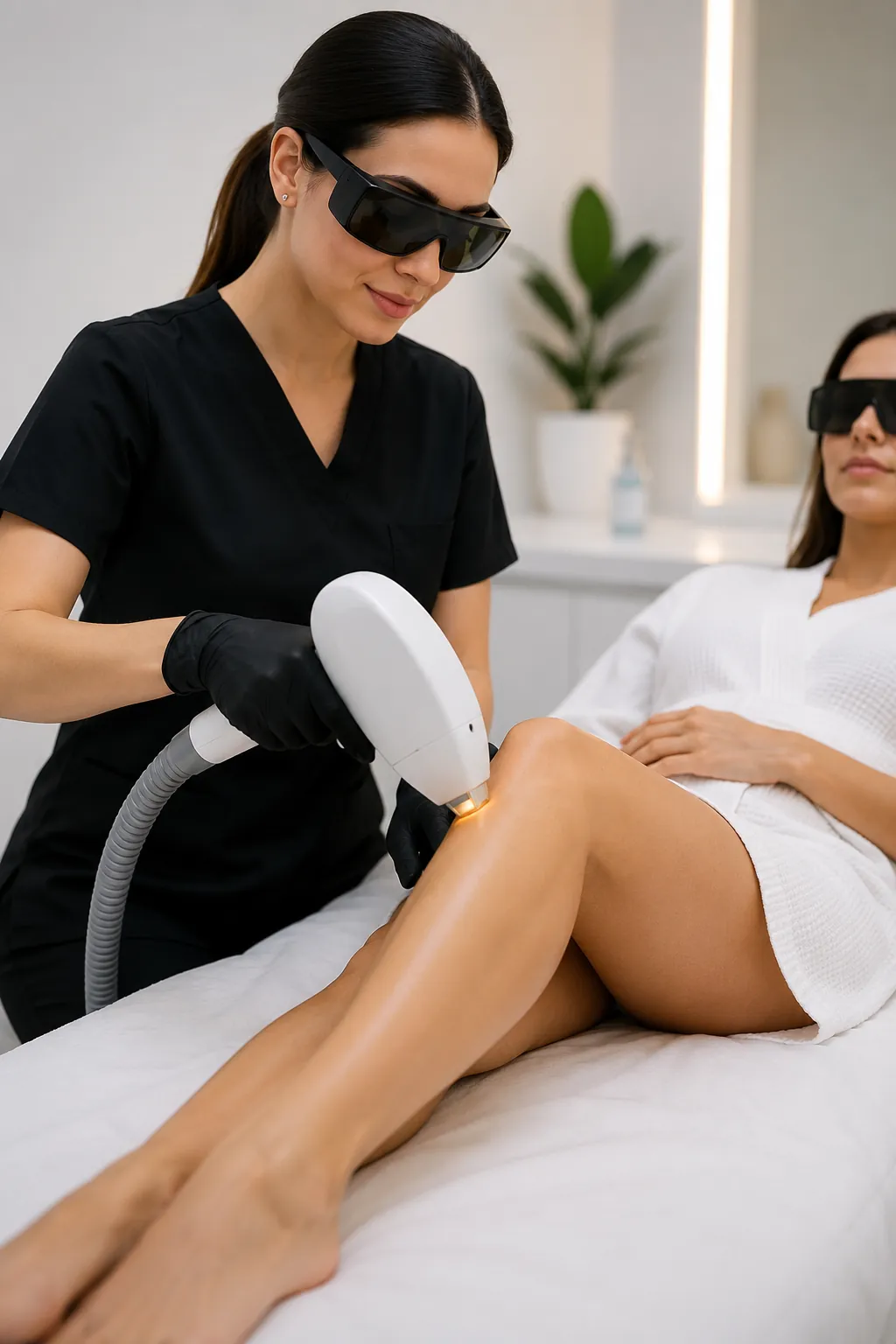
Professional laser hair removal session on a woman's leg at a medical spa in Glendale, CA.
Reviewed by Dr. Narbeh Tovmassian, MD, FACPWritten by Ani Mardirosian

How Many Laser Hair Removal Sessions Do You Really Need?

The most common question about laser hair removal is also the most practical: how many sessions will it actually take? The honest answer is that it depends on a few factors, but there is a clear range and a clear reason behind it. This guide explains why multiple sessions are necessary, what affects the number, and how to get the smoothest, longest-lasting results at Elevate Aesthetics in Glendale, CA.
The Short Answer

Most people need around six to eight sessions to achieve significant, long-lasting hair reduction, with treatments spaced several weeks apart. Some areas or hair types need a few more, and periodic maintenance sessions help keep results smooth over the long term. A single session will reduce hair noticeably, but it will not give permanent results on its own, and any clinic promising one-and-done results is not being straight with you.

Why You Need Multiple Sessions: The Hair Growth Cycle

Laser hair removal works by targeting the pigment in the hair follicle during its active growth phase, called anagen. The catch is that at any given moment only a portion of your hair is in that active phase. The rest is dormant and invisible to the laser. Each session treats the hairs that happen to be active that day, and as the cycles rotate, subsequent sessions catch the follicles that were previously dormant. This is why sessions are spaced out and why a series is required to treat all the follicles in an area.

What Affects How Many Sessions You Need

Treatment area: coarse areas like underarms and bikini often respond faster than fine areas like the face

Hair color: dark hair responds best because it has the most pigment for the laser to target

Hair thickness: coarse hair often clears in fewer sessions than fine, light hair

Hormones: hormonal factors can prompt new growth, so some people need maintenance

Consistency: keeping to the recommended schedule is the single biggest factor in results

How Far Apart Should Sessions Be?

Sessions are typically spaced about four to six weeks apart for the face and body areas with faster cycles, and a little longer for slower-growing areas. The spacing is intentional, it lines up with the hair growth cycle so each session catches a fresh wave of active follicles. Coming in too early wastes a session on follicles that are still dormant, while waiting too long is less efficient. Your provider sets the ideal interval for each area.

What Results to Expect Along the Way

You will see progressive thinning rather than an overnight change. After the first couple of sessions, hair grows back slower and finer. By the middle of your series, regrowth is noticeably patchier and lighter. By the end, most of the hair is gone and what remains is sparse and fine. Because hormones and biology can reactivate a few follicles over time, occasional maintenance keeps the area smooth.

Does It Hurt, and Is There Downtime?

Most patients describe the sensation as a quick snap, like a rubber band against the skin, with modern lasers offering cooling for comfort. There is essentially no downtime. The area may look slightly pink for a short time, similar to a mild sunburn, and you can return to your day right away with proper sun protection.

How to Get the Best Results

Stick to your schedule so each session aligns with the growth cycle

Shave, do not wax or pluck, between sessions so the follicle stays intact for the laser

Avoid sun and self-tanner before treatment to reduce risk and improve effectiveness

Wear daily SPF on treated areas

Laser Hair Removal Pricing and Packages

Elevate prices laser hair removal by body area and offers packages, including a buy four sessions and get the fifth free deal, which fits perfectly with the multi-session nature of the treatment. You can see the full price list for every area on our pricing page, and check our specials page for seasonal discounts on popular areas.

How Laser Hair Removal Actually Works

Understanding the mechanism makes the whole process make sense. The laser emits a specific wavelength of light that is absorbed by the melanin, the pigment, in the hair shaft and follicle. That light energy converts to heat, which damages the follicle enough to disable its ability to produce new hair, all while leaving the surrounding skin unharmed when the settings are matched to your skin. Because the laser relies on pigment and on the follicle being in its active growth phase, this explains both why dark hair responds best and why a series spaced across the growth cycle is necessary to treat every follicle.

Common Myths About Laser Hair Removal

Several myths cause unnecessary hesitation. One is that laser is unbearably painful; in reality, most patients describe a quick snap, and modern lasers cool the skin for comfort. Another is that one or two sessions will do it; because of the growth cycle, a series is always needed. A third is that it does not work on darker skin, which is outdated, today's lasers can safely treat a wide range of tones with the right settings. Finally, some believe results are not permanent; while occasional maintenance may be needed, the bulk of treated follicles stop producing hair for good, which is very different from the endless cycle of shaving and waxing.

Laser Hair Removal and Different Skin Types

A common worry is whether laser hair removal will work for your skin tone, and the answer has improved dramatically with modern technology. Laser targets the pigment in the hair, so it has always worked best on dark hair against lighter skin. Today's advanced lasers, however, can safely and effectively treat a much wider range of skin tones, including the olive and darker complexions common across the diverse Glendale and Los Angeles community, by adjusting wavelength and settings. The key is a provider who selects the right device and parameters for your specific skin and hair, which is exactly what a consultation determines. Very light, gray, or red hair remains the hardest to treat because it lacks enough pigment for the laser to find.

What to Avoid Between Sessions

Getting the most from your series means a few simple do's and don'ts between visits:

Do shave when needed, since it keeps the follicle intact for the next treatment

Do not wax, pluck, or thread, which removes the follicle the laser targets

Avoid sun exposure and self-tanner, which can interfere with treatment and raise risk

Wear daily SPF on treated areas to protect the skin

Keep your appointments on schedule so each session aligns with the growth cycle

Why Professional Treatment Beats At-Home Devices

At-home laser and IPL gadgets are tempting, but they are far weaker than clinical lasers by design, for safety reasons. That lower power means slower, less complete, and less reliable results, and the wrong use on the wrong skin tone can cause irritation or pigment changes. A professional treatment uses medical-grade technology calibrated to your skin, performed by a trained provider who can adjust for each area and catch any issue early. For a sensitive, long-term investment like permanent hair reduction, professional treatment delivers better results in fewer sessions and with greater safety.

Maintenance After Your Series

Once you complete your initial series, most of the treated hair is gone for good. Because hormones and natural cycles can reactivate a small number of follicles over time, many patients schedule occasional maintenance sessions, perhaps once or twice a year, to keep the area perfectly smooth. This is far less frequent and far easier than the constant upkeep of shaving or waxing, and it is what keeps your results looking consistent for the long term.

Why Choose Elevate Aesthetics in Glendale

Elevate Aesthetics is a women-owned medical spa in Glendale, CA, trusted by more than 10,000 clients and rated 4.9 stars. Laser hair removal is performed with technology suited to a range of skin types, on a schedule built around your hair growth cycle for real, lasting reduction. Every treatment is overseen by our Medical Directors, Dr. Garen Derhartunian and Dr. Narbeh Tovmassian, with a focus on safe, natural-looking results.

Frequently Asked Questions

Most people need about six to eight sessions for significant, lasting reduction, with occasional maintenance afterward. The exact number depends on the area, hair color, and your biology.

Only hairs in the active growth phase respond to the laser, and at any time only some of your follicles are active. A series treats each wave as the cycles rotate.

Usually four to six weeks depending on the area, timed to match the hair growth cycle so each visit catches newly active follicles.

Shave. Waxing or plucking removes the follicle the laser needs to target. Shaving leaves the follicle intact while keeping the surface clear.

It provides long-lasting hair reduction. Most treated follicles stop producing hair, though hormones can reactivate a few over time, which maintenance sessions address.

It works best on dark hair, which has the most pigment. Very light, gray, or red hair responds less well. A consultation confirms what to expect for your hair and skin.

Ready to Get Started?

Want a clear plan for smooth, lasting results? Book your free consultation at Elevate Aesthetics and our team will build a plan around your goals.

Elevate Aesthetics
509 1/2 E. Broadway, Glendale, CA 91205
4.95 stars
Opening Hours
Monday - Thursday10:00 AM - 5:00 PM
Friday10:00 AM - 4:00 PM
Saturday9:00 AM - 2:00 PM
SundayClosed
Newsletter background

Stay In The Loop

Get updates on new treatments, promotions, and clinic news.