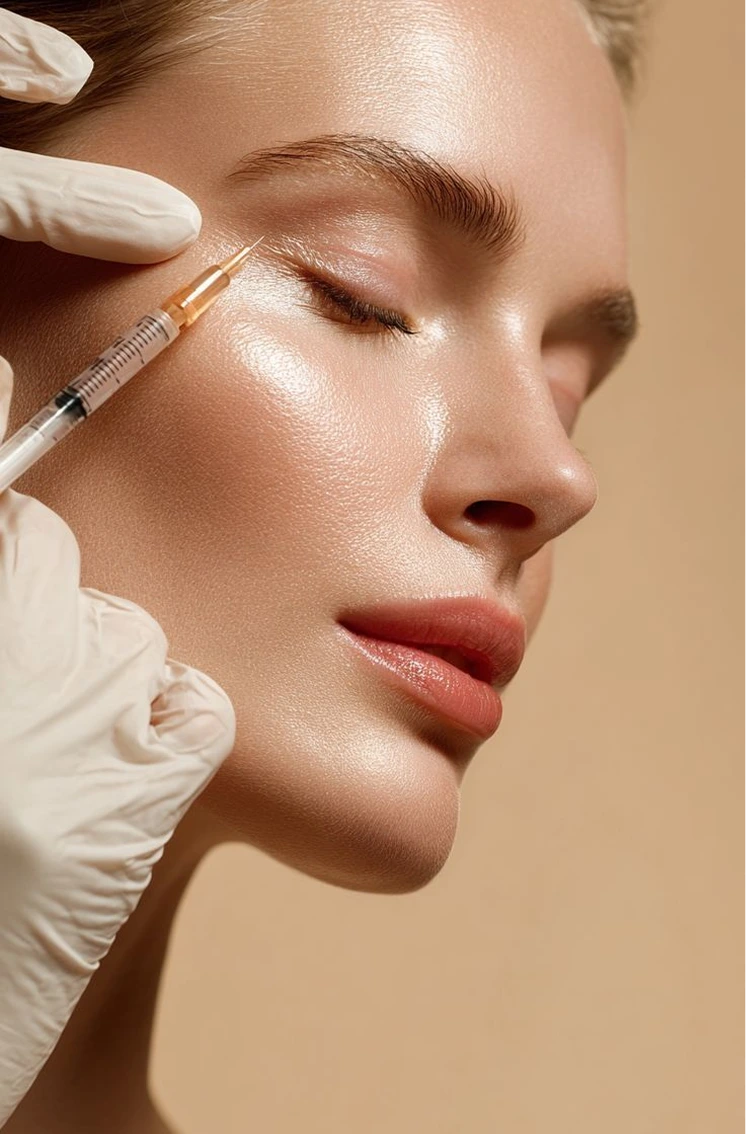
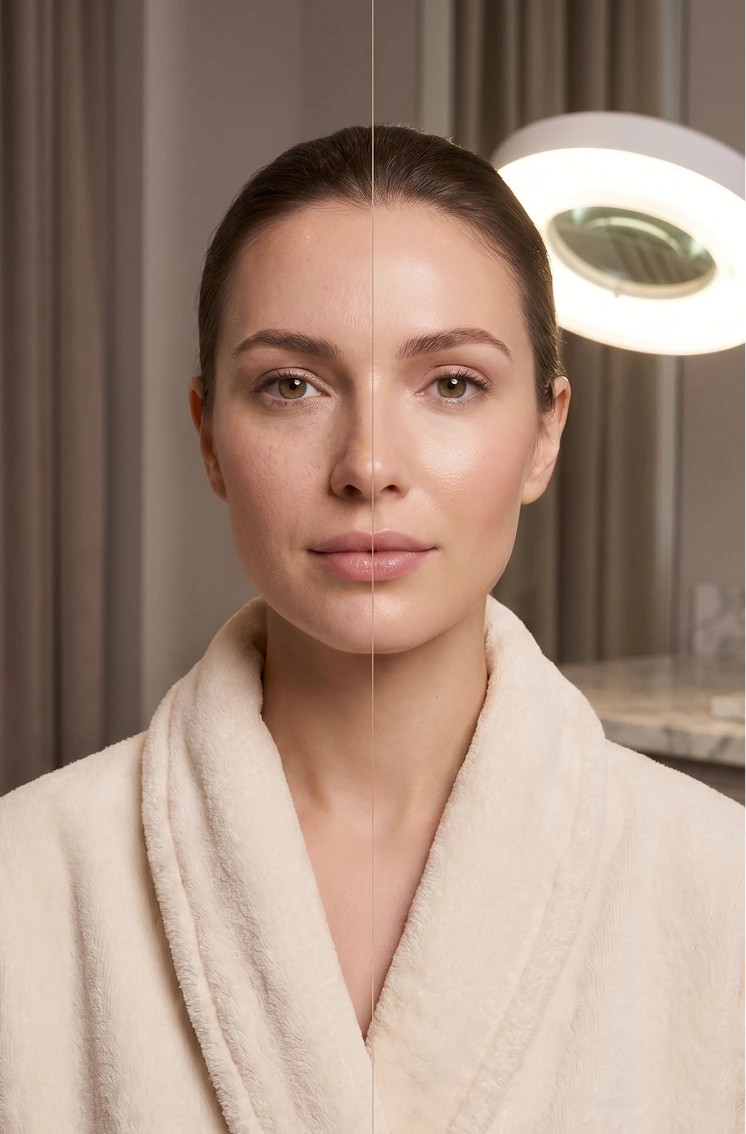
Botox treatment preparation for common facial treatment areas.
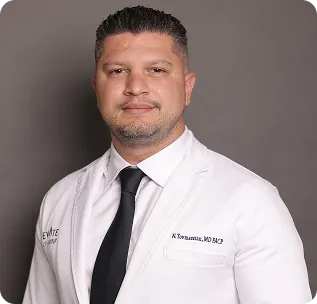
Reviewed by Dr. Narbeh Tovmassian, MD, FACPWritten by Ani Mardirosian

How Many Units of Botox Do You Actually Need? A Treatment-by-Treatment Guide (Forehead, Crow's Feet, Jaw & More)

One of the most common questions patients ask before their first appointment at Elevate Aesthetics in Glendale is some version of the same thing: how many units will I actually need? It is a fair question, and one that deserves a direct answer rather than a vague "it depends."

The short version: unit needs vary by area, muscle size, and the depth of existing lines. The longer version is below. This guide covers every major treatment area with specific unit ranges, what those numbers cost at Elevate Aesthetics, and the clinical reasoning behind why some areas require significantly more product than others.

All treatment at Elevate Aesthetics is performed or directly supervised by board-certified Medical Directors Dr. Garen Derhartunian MD and Dr. Narbeh Tovmassian MD.
1. Why Unit Count Varies From Person to Person

Botox works by temporarily blocking the nerve signal that causes a muscle to contract. The number of units required to achieve that effect depends on three main variables: the size of the muscle being treated, how strongly that muscle fires during natural expression, and how deep existing lines have become from years of repeated movement.

A patient with a naturally strong frontalis muscle who makes very animated expressions will require more units to smooth forehead lines than someone with lighter muscle activity. A patient who has been getting consistent Botox for three years may require fewer units per session than a first-timer, because the muscle has gradually learned to stay more relaxed over time.

Gender also plays a role. Male patients generally have larger, denser facial muscles and require higher unit counts across nearly every area to achieve equivalent results. At Elevate Aesthetics in Glendale, Dr. Derhartunian and Dr. Tovmassian factor all of this into the assessment before recommending a unit count at your free consultation.

The unit ranges in this guide represent what the majority of Glendale patients receive. Your specific number may fall slightly below or above the range depending on your anatomy.

2. Upper Face: Forehead, Frown Lines, and Brow Lift

The upper face is the most commonly treated area and where most patients start. Three distinct muscle groups are involved: the frontalis (forehead), the corrugator and procerus (frown lines between the brows), and the small muscles involved in brow position.

Forehead lines (horizontal): The frontalis muscle is responsible for the horizontal creases that appear when you raise your eyebrows. Most Glendale patients need 10 to 20 units. The frontalis is a large muscle but must be dosed carefully because it also lifts the brow. Undertreating leaves lines visible; overtreating drops the brow line and creates a heavy appearance.

Frown lines / glabella ("11s"): The corrugator supercilii and procerus pull the brows inward and downward during concentration or frustration. These muscles tend to be strong and often require a slightly higher dose than the forehead: 15 to 25 units for most patients. This area is often called the single most impactful treatment on the face because softening the "11s" opens the brow, relaxes the entire upper face, and changes how a person reads at rest.

Brow lift: A small amount of Botox placed precisely below the tail of the brow can produce a subtle lift by relaxing the muscle that pulls the outer brow downward. This requires only 4 to 8 units per side but must be placed very accurately to avoid affecting neighboring muscles.

3. Eye Area: Crow's Feet and Under-Eye Lines

The orbicularis oculi is the muscle that encircles the eye and is responsible for two of the most visible signs of facial aging: crow's feet at the outer corners and the fine lines that appear under the eye when smiling.

Crow's feet: Most Glendale patients require 10 to 15 units per side (20 to 30 units total for both sides). The orbicularis is a thin but active muscle and responds well to Botox. Results in this area tend to look very natural because the muscle is not responsible for brow position or expression in the way the frontalis is. Most patients find crow's feet one of the easier areas to treat.

Under-eye lines (infraorbital): A small amount of Botox placed just below the lower lash line can soften the fine lines that bunch when smiling. This area requires only 2 to 4 units per side and is considered an advanced placement. It carries a slightly higher risk of bruising and must be performed by a physician experienced with this specific injection point.

Bunny lines (nose scrunch lines): The nasalis muscle creates diagonal lines that appear on either side of the nose during certain expressions. Most patients who notice bunny lines need 5 to 10 units total. This is commonly treated as a complement to crow's feet or frown line work, since the nasalis activates in the same expressions.

4. Lower Face: Lip Flip, Gummy Smile, and Chin

The lower face responds to Botox at much smaller doses than the upper face. Precision matters more here because the muscles involved control speaking, eating, and expression, and any overtreatment is far more noticeable in daily life.

Lip flip: A very small dose of Botox placed in the orbicularis oris at the upper lip causes the lip to relax and roll slightly outward, making it appear fuller without adding volume. Most patients need only 4 to 6 units. The effect is subtle and temporary (typically 6 to 8 weeks in this area), and it works best as a complement to lip filler rather than a replacement.

Gummy smile: Patients who show a significant amount of gum above the upper teeth when smiling may benefit from 2 to 4 units of Botox placed in the levator labii superioris alaeque nasi. This small dose limits how high the upper lip rises during a smile.

Chin dimpling (peau d'orange): The mentalis muscle is responsible for the dimpled, irregular texture that appears on the chin in some patients. Relaxing it with 4 to 6 units smooths the chin surface. Many patients are not aware this is treatable until their physician points it out during a consultation.

Downturned corners of the mouth (DAO): The depressor anguli oris pulls the corners of the mouth downward, contributing to a permanently unhappy expression at rest. Treating it with 3 to 6 units per side can lift the corners subtly and soften the appearance.

5. Masseter (Jaw Slimming and TMJ Relief)

The masseter is the large, powerful muscle responsible for chewing. It sits at the angle of the jaw and, when overdeveloped, creates a wide, square jawline that many patients want to soften. It is also the source of chronic jaw tension and teeth grinding (bruxism) that causes significant discomfort for many people.

Masseter Botox requires a significantly higher unit count than any other facial area. Most Glendale patients need 15 to 30 units per side, with some patients with very prominent masseter hypertrophy needing up to 35 units per side.

The results serve two purposes. For patients seeking jaw slimming, the masseter gradually reduces in size over 3 to 6 months as the muscle atrophies from reduced use. For patients with bruxism or TMJ pain, the relief from clenching and grinding can be dramatic and may reduce or eliminate morning jaw pain, headaches, and tooth wear.

Because the masseter is a much larger muscle than any surface facial muscle, the results also take longer to appear, typically 4 to 6 weeks, and tend to last longer, often 4 to 6 months per treatment.

6. Neck Bands (Nefertiti Lift and Platysma)

The platysma is the broad, flat muscle that runs from the jaw down the neck. As it ages, it can create visible vertical bands on the neck and pull the lower face and jawline downward. Botox injected into the platysmal bands relaxes them, reducing the visible cords on the neck and providing a subtle lift to the jawline and lower face. This technique is sometimes called the Nefertiti lift.

Most patients need 20 to 40 units for the neck, distributed across multiple points along each visible band. The unit count depends on the number and width of the bands present. Patients with mild banding typically need 20 to 25 units; those with more prominent cords may require the higher end of the range.

Results in this area typically last 3 to 4 months and are best appreciated in combination with treatment of the lower face and jaw.

7. Full Area Unit Reference

The table below summarizes unit ranges and costs at Elevate Aesthetics in Glendale for all common treatment areas.

For a complete breakdown of all current pricing, visit the Elevate Aesthetics pricing page. For seasonal promotions and current offers, see the specials page.

Treatment AreaTypical Unit RangeCost at $14/unit
Forehead lines10 to 20 units$140 to $280
Frown lines / "11s"15 to 25 units$210 to $350
Crow's feet (per side)10 to 15 units$140 to $210 per side
Brow lift (per side)4 to 8 units$56 to $112 per side
Bunny lines (nose)5 to 10 units$70 to $140
Lip flip4 to 6 units$56 to $84
Gummy smile2 to 4 units$28 to $56
Chin dimpling4 to 6 units$56 to $84
Downturned mouth corners3 to 6 units per side$42 to $84 per side
Masseter / jaw (per side)15 to 30 units$210 to $420 per side
Neck bands20 to 40 units$280 to $560
Full upper face35 to 65 units$490 to $910

8. What a Full Multi-Area Treatment Looks Like

Most Glendale patients at Elevate Aesthetics do not treat every area at once, particularly on a first visit. The most common starting combinations are:

Upper face only (forehead + frown lines): 25 to 45 units, $350 to $630. The most common starting point for patients in their late twenties to forties who are primarily concerned with expression lines.

Full upper face (forehead + frown lines + crow's feet): 35 to 65 units, $490 to $910. The most common comprehensive upper-face combination, addressing all three zones of the upper face in one appointment.

Jaw focus (masseter bilateral): 30 to 60 units total, $420 to $840. Patients seeking jaw slimming or bruxism relief often treat only the masseter initially.

Upper face + masseter: 65 to 125 units total, $910 to $1,750. A popular combination for patients who want to address both facial lines and jaw width in the same session.

Preventative treatment (baby Botox): 20 to 35 units, $280 to $490. Lower doses across one or two areas for patients in their mid-to-late twenties who want to slow the formation of expression lines before they set permanently.

Some patients in these combinations also add Sculptra to the same appointment, which builds collagen gradually over time and restores the volume that Botox does not address.

For the full range of treatments available at Elevate Aesthetics, visit the services page.

Frequently Asked Questions

A full-face treatment covering the forehead, frown lines, crow's feet, brow lift, lip flip, and chin typically requires 50 to 90 units for most Glendale patients. Adding the masseter or neck can bring the total to 100 to 150 units or more. Dr. Derhartunian and Dr. Tovmassian provide an exact unit estimate during the free consultation before any treatment begins.

The masseter requires the highest unit count of any single area, typically 15 to 30 units per side (30 to 60 units total for both sides). This is because the masseter is a large, powerful chewing muscle and requires significantly more product than the thin surface muscles of the upper face.

Muscle size, muscle strength, and how expressive a person's natural movements are all affect how many units are needed. Male patients generally need 20 to 40 percent more units than female patients in equivalent areas due to greater muscle density. First-time patients sometimes need slightly more than repeat patients, whose muscles have become gradually less active with consistent treatment.

Most first-time patients at Elevate Aesthetics in Glendale treat one or two areas and use 25 to 45 units total. Dr. Derhartunian and Dr. Tovmassian start conservatively on first visits, then assess results at a complimentary two-week follow-up. If additional units would improve the outcome, they can be added at that appointment.

Not necessarily in a straightforward way. Results last longer when the correct amount of product fully relaxes the target muscle. Significant underdosing may produce shorter duration, while the appropriate dose for your anatomy tends to give the most consistent and longest-lasting results. Regular patients on a consistent schedule often see longer intervals between treatments over time as muscles become trained to stay relaxed.

Yes. Treating multiple areas in one appointment is standard at Elevate Aesthetics. Combining the upper face with the masseter, neck, or lower face is common and does not require additional recovery time. The full treatment still takes 15 to 30 minutes regardless of how many areas are addressed.

The free consultation at Elevate Aesthetics is the starting point. Dr. Garen Derhartunian MD or Dr. Narbeh Tovmassian MD reviews your concerns, assesses your muscle activity at rest and during expressions, and recommends the areas and unit counts that match your goals.

Book Your Consultation in Glendale

The right unit count for each area is not something that can be determined from a chart alone. It requires an in-person assessment of your anatomy, your muscle activity, and what you are trying to achieve.

At Elevate Aesthetics in Glendale, every consultation is free, conducted by a board-certified physician, and built around giving you an honest unit estimate and cost before any decision is made. Many patients are surprised at how straightforward the process is once they are in the room with a physician who knows what to look for.

Elevate Aesthetics is located at 509 1/2 E. Broadway, Glendale, CA 91205. Call (818) 855-8403 or book your free consultation online.

Elevate Aesthetics
509 1/2 E. Broadway, Glendale, CA 91205
4.95 stars
Opening Hours
Monday - Thursday10:00 AM - 5:00 PM
Friday10:00 AM - 4:00 PM
Saturday9:00 AM - 2:00 PM
SundayClosed
Newsletter background

Stay In The Loop

Get updates on new treatments, promotions, and clinic news.