

Woman smiling broadly and showing her upper teeth and gumline, illustrating gummy smile Botox treatment in Glendale.
Reviewed by Dr. Narbeh Tovmassian, MD, FACPWritten by Ani Mardirosian

Gummy Smile Botox in Glendale: How It Works, Units Required, Cost & Before-After Results

A gummy smile is one of the most common cosmetic concerns people hesitate to bring up at a medspa, yet it is one of the easiest to treat with a precise Botox injection. If your upper gums show more than two to four millimeters when you smile fully, a single short appointment can change that. At Elevate Aesthetics LA's injectable services in Glendale, gummy smile correction takes fewer than 10 minutes and requires no downtime at all.

This guide walks through exactly how the treatment works, which muscle is injected, how many units most patients need, what the cost looks like, and what your smile will look like two weeks after the appointment.

If you are already familiar with Botox for facial lines and wrinkles, gummy smile correction follows the same general principle with one important difference: the dose is very small and the placement is highly specific. Getting this right depends almost entirely on your injector's anatomy knowledge, which is why provider selection matters more here than for standard forehead or glabellar treatment.
What Is a Gummy Smile?

A gummy smile, clinically called excessive gingival display, occurs when the upper lip rises too far during a smile, exposing a larger than average band of gum tissue above the teeth. According to the American Academy of Periodontology, exposure of more than three to four millimeters of gum tissue is generally considered the threshold where someone notices their smile looks gummy.

The cause is almost always hyperactivity in the levator labii superioris alaeque nasi muscle, commonly abbreviated as the LLSAN. This muscle runs along the side of the nose and connects to the upper lip. In people with a gummy smile, this muscle contracts more forcefully or has a shorter resting position than average, pulling the lip higher than needed when smiling.

Some cases involve a short upper lip or a longer-than-average gum line due to bone structure, but the majority of gummy smiles are muscular in origin, which is exactly why Botox works well for them. You are not changing the structure of your teeth, gums, or jaw. You are simply reducing the range of motion in one overactive muscle.

How Botox Corrects a Gummy Smile

Botox (onabotulinumtoxinA) works by blocking the neuromuscular junction that signals a muscle to contract. When injected into the LLSAN muscle, it reduces the strength and range of that upward pull on the lip. The lip still moves naturally when you smile, speak, or eat, but it does not rise as high as it did before. The result is a smile that shows more tooth and less gum.

The American Academy of Dermatology confirms that botulinum toxin injections are among the most studied cosmetic procedures in use today, with consistent results across a wide range of applications including muscle relaxation for aesthetic concerns.

What makes gummy smile correction different from treating forehead lines is the subtlety required. Too little product and the gum exposure remains unchanged. Too much and the lip can feel heavy or slightly uneven during facial movement. An experienced injector assesses your muscle anatomy, measures how much gum tissue is visible at full smile, and places the injection at a precise point along the muscle belly rather than guessing by zone.

Which Muscles Are Targeted?

The primary target is the LLSAN (levator labii superioris alaeque nasi), which sits just lateral to the base of the nose. Some injectors also address the levator labii superioris or the zygomaticus minor depending on where gum exposure is most pronounced. For most patients, one injection point per side is sufficient.

The injection site is typically located about one centimeter above the nostril wing. The needle is inserted superficially into the muscle belly at that point, and the product is deposited in a small, precise volume. The entire bilateral treatment takes under five minutes of active injection time.

For patients whose gummy smile is symmetrical, the treatment is usually symmetric as well. Where one side shows slightly more elevation than the other, your provider can adjust dosing per side to balance the result.

How Many Units Do You Need?

Gummy smile correction requires far fewer units than most patients expect. The typical starting dose is two to four units total, split evenly between both sides. A study published in the Journal of Clinical and Experimental Dentistry found that doses in this range reliably reduced gingival display without compromising natural lip movement in most patients.

Some providers use up to six units for cases where the LLSAN is significantly overactive or the patient's anatomy requires a stronger signal. Going above six units increases the risk of temporary lip heaviness or uneven movement, so experienced injectors tend to start conservatively and allow a two-week follow-up to assess whether an adjustment is needed.

To give you a rough comparison: a typical forehead treatment uses 10 to 20 units. Crow's feet use six to 12 units. Gummy smile correction uses two to six units. This is one of the smallest doses in injectable treatment, which also means it is one of the most affordable Botox procedures you can have done.

What Does Gummy Smile Botox Cost in Glendale?

Pricing varies by how many units your case requires and your provider's per-unit rate. At a reputable medspa in the Glendale area, expect to pay between $150 and $300 for gummy smile correction, depending on whether two, four, or six units are used.

Check current pricing and active specials at Elevate Aesthetics LA before booking, as promotional rates are available at various points throughout the year. Because the dose is small, this is one of the few Botox treatments where the total cost stays accessible even for first-time patients who are not sure whether they want to commit to a full treatment plan.

Unlike surgical gummy smile correction, which involves reshaping the gum tissue or repositioning the lip with anchoring sutures, Botox requires no recovery period and no significant financial commitment. If you decide after your first treatment that you prefer a more conservative result, you simply wait for the product to wear off and start with a lower dose next time.

What to Expect: Before, During, and After

Before your appointment, avoid blood-thinning medications, supplements, and alcohol for 24 to 48 hours when possible. These do not affect the Botox itself, but they reduce the likelihood of minor bruising at the injection site.

At your appointment, your provider will photograph your smile at rest and at full expression, measure gum exposure in millimeters, and mark the injection point on each side. Topical numbing is available but rarely necessary since the needle used is very fine and the injection depth is shallow. Most patients describe the sensation as a small pinch on each side.

After the injection, you may notice a tiny raised area at each injection point that resolves within 20 minutes. There is no swelling, no bandages, and no activity restriction. You can return to work, eat normally, and resume your usual routine immediately.

Results begin appearing within five to seven days as the muscle starts to respond to the product. Your full result is visible at 14 days, which is also when any follow-up adjustment would be made if needed. Duration is typically three to four months, after which the muscle gradually returns to its normal level of activity. Most patients schedule a repeat appointment at that point to maintain the result.

Before-After Results: What Changes

The most immediate thing patients notice is that their upper teeth are more visible when they smile. Because the lip does not retract as far upward, the smile appears fuller and more balanced rather than pulled. Gum tissue is still visible in a natural way, just not to the degree that was drawing attention before.

The change is subtle enough that most people will not be able to identify what looks different. They will simply notice that your smile looks more confident and composed. This is generally the goal: a correction that blends naturally with your face rather than one that announces itself.

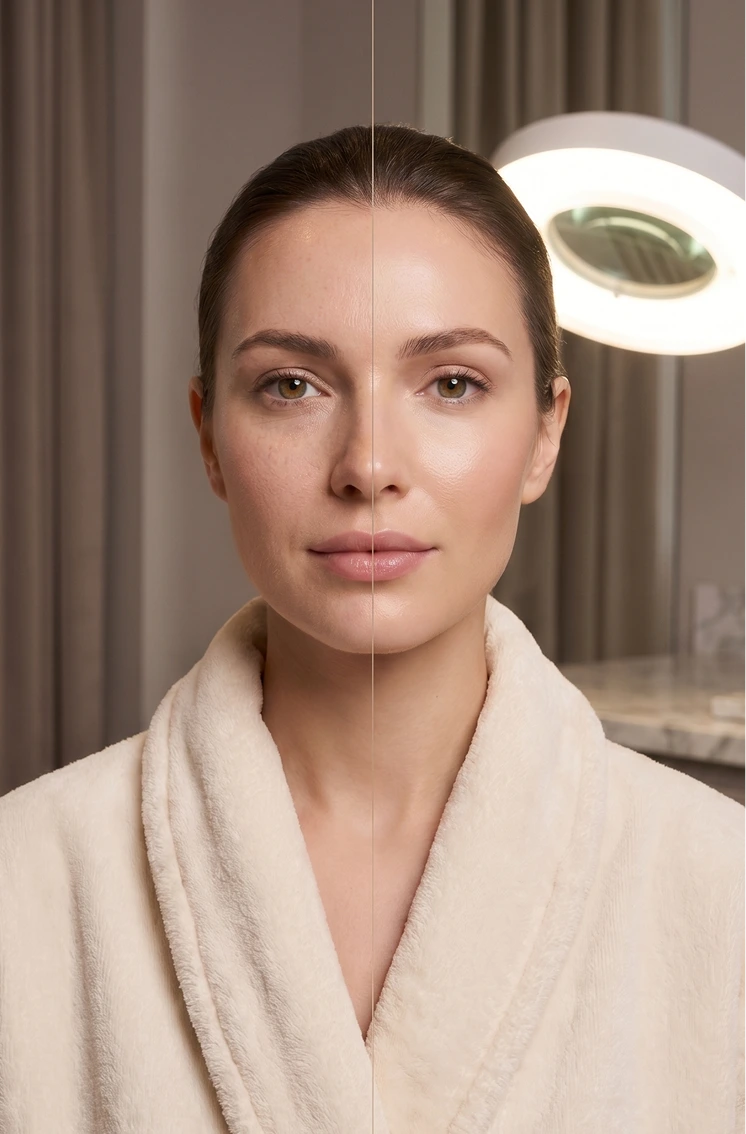
Patients who photograph before and after at the same full-smile expression consistently show a measurable reduction in gum exposure, often by several millimeters. The overall effect is consistent across skin tones, smile widths, and lip shapes, since the muscle being treated is the same regardless of facial anatomy variation.

Is Gummy Smile Botox Right for You?

This treatment works best for patients whose gummy smile is caused primarily by upper lip hyperactivity rather than by dental or skeletal factors. A good candidate shows gum exposure of three millimeters or more at full smile, has realistic expectations about duration and maintenance, and is in generally good health without neuromuscular conditions that contraindicate botulinum toxin use.

It is not typically recommended during pregnancy or breastfeeding and is contraindicated in patients with certain neurological conditions. A brief consultation covers your medical history and confirms you are a good fit before any treatment takes place.

If you are ready to find out whether this is the right correction for your smile, schedule a consultation at Elevate Aesthetics LA in Glendale. The appointment includes a full assessment, unit recommendation, and honest expectation-setting before anything is injected.

Frequently Asked Questions

Most patients describe the sensation as a mild pinch at each of the two injection points. The needle used is very fine and the depth is shallow, so discomfort is minimal. Topical numbing cream can be applied beforehand if you prefer, but the majority of patients at Elevate Aesthetics LA do not find it necessary for a treatment this brief.

Results typically last three to four months before the muscle gradually returns to its baseline activity level. Some patients find their results extend slightly longer after repeat treatments, though this varies by individual. Most patients schedule a maintenance appointment at the three-month mark to keep the result consistent.

When placed correctly in the LLSAN muscle at the appropriate dose, gummy smile Botox should not affect speech, eating, or drinking. The lip retains full movement. The only thing that changes is the maximum elevation of the upper lip when smiling at full expression. If you notice any asymmetry or difficulty within the first two weeks, contact your provider for a follow-up assessment.

The standard starting range is two to four units total, split evenly between both sides of the nose. Cases with more pronounced muscle activity may require up to six units. This is significantly less than most other Botox treatments, which is why the procedure is one of the more affordable injectable options available.

No. Botox is temporary by design. The effect fades as your body gradually metabolizes the product over three to four months. This is actually an advantage for first-time patients: if you are unsure about the degree of correction, you can adjust the dose up or down at your next appointment based on how you felt about the result.

Surgical correction for a gummy smile typically involves either crown lengthening (reshaping gum tissue) or a lip repositioning procedure. Both require recovery time, involve greater cost, and produce permanent changes that cannot be undone. Botox offers a reversible, low-commitment alternative that addresses the muscle responsible for lip elevation without any incision or healing period.

Elevate Aesthetics
509 1/2 E. Broadway, Glendale, CA 91205
4.95 stars
Opening Hours
Monday - Thursday10:00 AM - 5:00 PM
Friday10:00 AM - 4:00 PM
Saturday9:00 AM - 2:00 PM
SundayClosed
Newsletter background

Stay In The Loop

Get updates on new treatments, promotions, and clinic news.