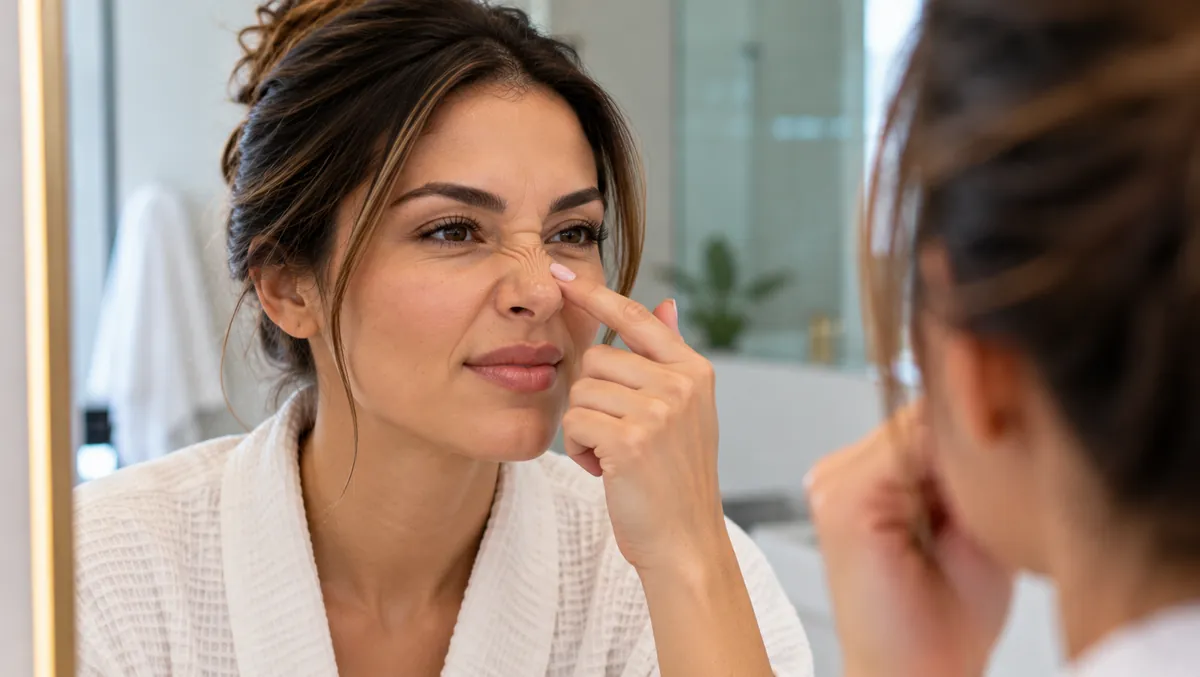
Woman examining bunny lines around her nose in a bathroom mirror
Reviewed by Dr. Narbeh Tovmassian, MD, FACPWritten by Ani Mardirosian

Bunny Lines Botox in Glendale: What Causes Nose Wrinkles, How It's Treated & Recovery Tips

Bunny lines are the diagonal wrinkles that appear on the sides of the nose when you scrunch or wrinkle it. They are named for the nose-scrunching expression a rabbit makes, and they are created by the nasalis muscle, which runs along either side of the nose bridge.

For many patients, bunny lines become noticeable after beginning Botox treatments in the glabella or forehead. When those surrounding muscles are relaxed, the nasalis compensates, contracting more frequently and more visibly than it did before.

This guide explains what causes bunny lines, how Botox addresses them, how many units the treatment typically requires, and what recovery looks like in Glendale.
What Are Bunny Lines and What Causes Them

The nasalis muscle is a paired muscle that runs along both sides of the nose. It has two functions: it compresses the nose along the bridge and flares the nostrils. When the transverse portion contracts repeatedly, it creates diagonal creases that fan out from the nose bridge toward the cheeks.

These lines are dynamic, meaning they appear during muscle contraction and may fade when the face is at rest in younger patients with good skin elasticity. Over time, with repeated movement, they can become more persistent and visible even without active expression.

Some patients develop bunny lines independent of any other treatment, as a natural result of habitual expression and facial movement. Others first notice them after starting Botox elsewhere, particularly in the glabella and forehead.

The American Academy of Dermatology describes dynamic line formation as a direct result of repeated muscle contraction against the overlying skin, a mechanism that applies equally to bunny lines as to forehead lines or crow's feet.

Why Bunny Lines Can Appear After Glabella Botox

This is one of the more clinically interesting aspects of bunny lines: they often become more visible after a patient starts treating the glabella, even if those lines were not particularly noticeable before.

The reason is muscle compensation. The nasalis and the corrugator, the main glabella muscle, work in proximity and often contract together during similar expressions. When the corrugator is relaxed by Botox, the nasalis takes on more of the expressive load. It contracts more frequently and more forcefully than it did before, which causes bunny lines to become more prominent.

This is not a complication or a mistake. It is a predictable anatomical response that experienced injectors anticipate. Many providers discuss the potential for bunny lines to develop or worsen when planning glabella treatment, particularly for patients who already have mild bunny lines before their first appointment.

Treating both the glabella and the nasalis in the same session is a common and well-established approach for patients who are already showing early bunny lines or who have a history of them appearing after glabella treatment.

How Botox Treats Bunny Lines

Botox for bunny lines works the same way it works elsewhere on the face. The botulinum toxin is injected into the nasalis muscle, blocking the nerve signal that tells the muscle to contract. With the nasalis relaxed, the diagonal creases along the nose sides soften or disappear during expression.

The injection points for bunny lines are placed along the side of the nose, usually two to three points per side. The placement requires care because the nasalis sits adjacent to the levator labii superioris, the muscle responsible for lifting the upper lip. Injecting too low or placing Botox outside the intended zone can cause temporary lip drooping or asymmetry, which is why this treatment is best performed by someone with direct experience in this specific area.

The American Society of Plastic Surgeons notes that off-target effects from neuromodulators in the mid-face are among the most common technique-related side effects, which underscores the importance of precise placement when treating smaller, technically demanding areas like the nasalis.

How Many Units Do Bunny Lines Require?

Bunny lines are a small treatment area, and the dose reflects that. Most patients need 5 to 10 units total, typically 3 to 5 units per side. This is one of the lower unit counts of any facial Botox area, which also means the cost per treatment is lower than larger areas like the forehead or glabella.

Because the nasalis is a relatively small muscle, the starting dose is usually conservative for first-time patients. Most providers assess the result at two weeks and add units at a touch-up if needed. Starting light in this area reduces the risk of affecting adjacent muscles and allows the injector to calibrate the dose to how your specific anatomy responds.

Patients who are also treating the glabella and forehead often add bunny lines to the same appointment. The combined dose for all three areas remains within the standard range for a single injectable session, and treating them together produces a more cohesive result because all the connected expressive muscles are addressed at once.

What to Expect During and After Treatment

Bunny line Botox follows the same general procedure as any other facial Botox appointment. Your provider will assess the nasalis by asking you to scrunch your nose and observe where and how the muscle contracts. The injection points are marked, and the treatment itself takes only a few minutes.

The injections are made with a very fine needle, and most patients describe the sensation as a quick pinch or sting at each point. There is no numbing required for most patients, though topical anesthetic can be applied beforehand if preferred.

Immediately after treatment, small bumps or mild redness may appear at the injection sites and typically resolve within an hour. Bruising is uncommon in this area but possible, particularly close to the nose where skin is thin.

Results begin to appear within five to seven days, with peak effect visible at two weeks. Duration averages three to four months, consistent with other facial Botox areas. Some patients find that bunny line results last slightly longer, which may be related to the smaller muscle mass being treated.

For the first 24 hours, avoid rubbing or pressing on the nose and avoid heat exposure such as saunas or steam rooms. Normal skincare and makeup can resume the same day, applied gently around the treated area.

How Much Does Bunny Line Botox Cost in Glendale?

Bunny line treatment is priced per unit at most practices. Because the dose is small, typically 5 to 10 units, it adds relatively little cost when added to an existing appointment for the glabella or forehead. Patients coming in specifically for bunny lines as a standalone treatment pay only for the units used.

Current per-unit pricing at Elevate Aesthetics LA is listed on the pricing page. Check the specials page before booking, as periodic promotions on injectables can reduce the per-unit rate.

Patients adding bunny lines to a full upper-face appointment typically find the added cost modest relative to the overall visit, and the visual result is more complete because all the connected expressive muscles are addressed at once.

Frequently Asked Questions

Bunny lines are the diagonal wrinkles that form on the sides of the nose when you scrunch or wrinkle it. They run from the nose bridge diagonally outward toward the cheeks, typically on both sides. They are created by the nasalis muscle and get their name from the nose-scrunching movement associated with a rabbit's expression. Like other expression lines, they can progress from visible only during movement to visible at rest as the skin loses elasticity over time.

This is a common and expected response. When the corrugator muscle in the glabella is relaxed by Botox, the nasalis often compensates by contracting more during similar expressions. The muscles work in proximity and share expressive load. With the glabella quieted, the nasalis becomes more active and bunny lines become more prominent. This does not mean the treatment was done incorrectly. It means the nasalis is a logical next area to address, either at the same time as the glabella or as an add-on at the next appointment.

The primary risk in this area is unintended effect on the levator labii superioris, the muscle that lifts the upper lip, which sits adjacent to the lower portion of the nasalis. If Botox is placed too low or drifts toward this muscle, it can cause temporary upper lip weakness or asymmetry. An experienced injector places the injection points in the upper nasalis, well away from the lip elevator, to avoid this outcome. Any off-target effect from Botox in this area is temporary and resolves as the treatment wears off over the following weeks.

Yes, and this is actually the most common approach. Most patients who treat their bunny lines do so as part of a full upper-face appointment that already includes the glabella and forehead. Adding bunny lines requires only a small number of additional units and a few extra minutes, and treating all the connected expressive areas together produces a more balanced result than treating each area at separate visits.

Results from bunny line Botox last an average of three to four months, consistent with other facial Botox areas. Some patients report that their bunny line results last slightly longer, which may be related to the relatively small muscle mass being treated with each session. Regular maintenance appointments are needed to sustain the result long-term.

Book a Consultation

To discuss bunny lines or add them to a full upper-face appointment, contact Elevate Aesthetics LA to schedule a consultation.

Elevate Aesthetics
509 1/2 E. Broadway, Glendale, CA 91205
4.95 stars
Opening Hours
Monday - Thursday10:00 AM - 5:00 PM
Friday10:00 AM - 4:00 PM
Saturday9:00 AM - 2:00 PM
SundayClosed
Newsletter background

Stay In The Loop

Get updates on new treatments, promotions, and clinic news.