
Woman receiving a Botox forehead treatment from a medical professional in a cosmetic clinic.
Reviewed by Dr. Narbeh Tovmassian, MD, FACPWritten by Ani Mardirosian

Botox for Forehead Lines & Frown Lines in Glendale: Units, Cost & What Real Results Look Like

The horizontal lines across your forehead and the vertical creases between your brows are the two most common reasons Glendale patients come to Elevate Aesthetics asking about Botox. They are also the areas where the difference between a great result and an over-treated one is most visible to the outside world.

At Elevate Aesthetics, both areas are treated under the direct supervision of board-certified Medical Directors Dr. Garen Derhartunian MD and Dr. Narbeh Tovmassian MD. This guide covers exactly what causes each type of line, how many units you actually need, what treatment costs at our Glendale clinic, and what you can realistically expect from results that look refreshed rather than frozen.
1. What Causes Forehead Lines and Frown Lines?

These two concerns look related but are driven by completely different muscles, which is why treating them effectively requires understanding what is actually happening beneath the surface.

The Frontalis Muscle: Where Forehead Lines Come From

The horizontal lines that appear across your forehead when you raise your eyebrows are caused by repeated contraction of the frontalis muscle. Every time you raise your brows in surprise, concern, or conversation, the frontalis shortens and creates those horizontal creases. Over years of repetitive movement, those temporary creases become permanent lines that stay visible even when your face is fully relaxed.

Botox works here by temporarily blocking the nerve signal that tells the frontalis to contract. When the muscle cannot fully engage, the skin above it stays smooth. At Elevate Aesthetics in Glendale, Dr. Derhartunian and Dr. Tovmassian treat the frontalis with careful dosing because this muscle also helps lift the brow. Too much Botox in the forehead can lower the brow line and create a heavy, tired appearance, which is exactly what most patients are trying to avoid.

The Corrugator and Procerus Muscles: Where Frown Lines Come From

The vertical creases between your eyebrows, commonly called the "11s" or glabella lines, come from two muscles working together: the corrugator supercilii and the procerus. These muscles pull the brows inward and downward during concentration, frustration, or squinting. The result is that signature vertical crease that can make you look permanently annoyed, even when you are not.

This area responds very well to Botox. Because the corrugator and procerus are responsible specifically for the scowling motion, treating them does not create a heavy or drooping effect the way overtreating the frontalis can. Most Glendale patients find frown line treatment to be the single most impactful area they can address, because softening those creases changes how the entire face reads at rest.

2. How Many Units Do Forehead Lines and Frown Lines Require?

Unit needs vary by individual based on muscle strength, the depth of existing lines, and how expressive your natural movement is. The ranges below reflect what Elevate Aesthetics patients in Glendale typically receive.

First-time patients often start at the lower end of each range. Dr. Derhartunian and Dr. Tovmassian take a conservative approach on initial treatments, preferring to add more at a two-week follow-up rather than overtreat on the first visit.

One important clinical nuance: your physician may recommend treating the frown lines alongside the forehead even if your primary concern is only the horizontal lines. The frontalis and the corrugator are mechanically linked. Treating the frontalis alone without addressing the corrugator can sometimes cause the brow to drop slightly, because the muscles that pull the brow down are now stronger relative to the ones lifting it. Treating both areas together produces a balanced result and is the most common approach at Elevate Aesthetics in Glendale.

For a complete breakdown of all treatment areas and pricing, see the Elevate Aesthetics pricing page.

Treatment AreaTypical Unit RangeApproximate Cost at $14/unit
Forehead horizontal lines10 to 20 units$140 to $280
Frown lines / glabella ("11s")15 to 25 units$210 to $350
Both areas combined25 to 45 units$350 to $630
Full upper face (forehead + frown + crow's feet)35 to 65 units$490 to $910

3. What Botox for Forehead Lines Costs in Glendale

At Elevate Aesthetics, Botox is priced at $14 per unit, with all injections performed or directly supervised by board-certified Medical Directors Dr. Garen Derhartunian MD and Dr. Narbeh Tovmassian MD.

For most Glendale patients treating the forehead only:

Light treatment (10 units): $140

Average treatment (15 units): $210

Stronger muscles or deeper lines (20 units): $280

For frown lines only:

Lighter dose (15 units): $210

Average (20 units): $280

Stronger muscles or deeper creases (25 units): $350

Combining both areas is the most common approach and puts most patients between $350 and $550 for their first treatment.

Elevate Aesthetics prices Botox per unit, not per area. That means you pay for exactly the amount of product placed, with no bundled fees or area minimums that obscure the real cost.

4. What Real Results Look Like

This is where most patients have the most anxiety going in. "Frozen forehead" is a real outcome, and it is entirely a result of technique and dosing, not an unavoidable side effect of Botox itself.

What Natural-Looking Results Feel Like

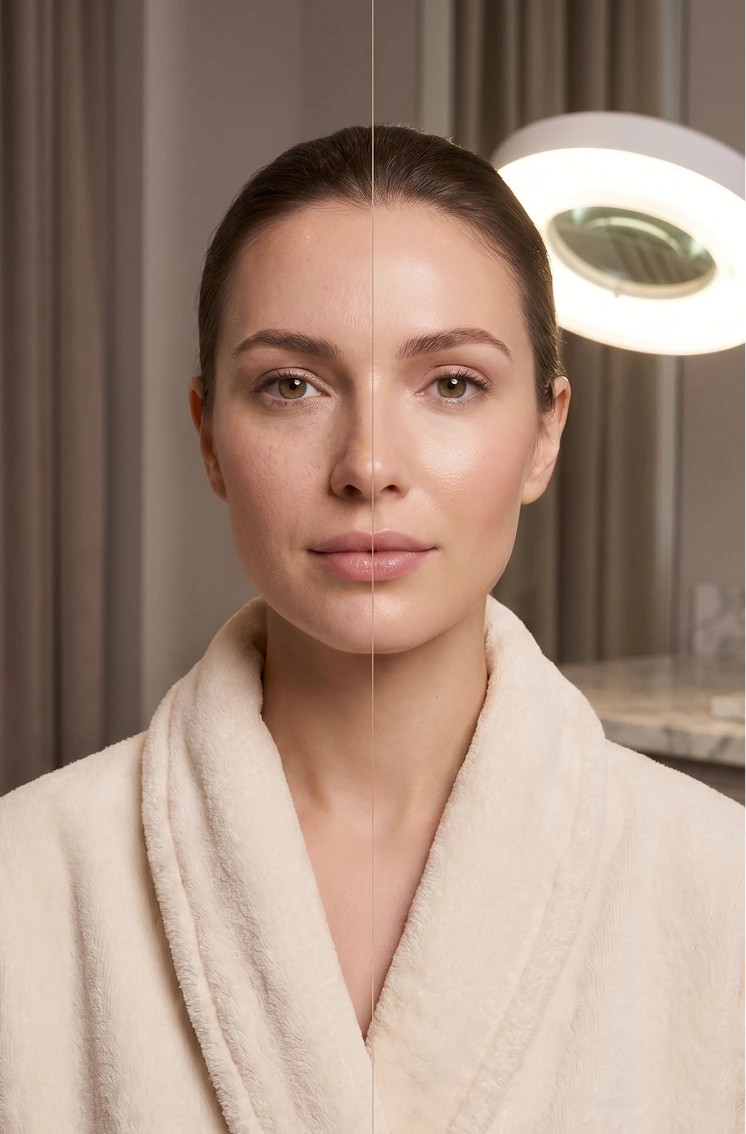
When forehead and frown line Botox is done at the right dose and placement, you should still be able to raise your eyebrows, show expression, and look animated in conversation. Lines that were present at rest soften or disappear. Lines that appeared during strong expressions become less prominent. The overall effect is that you look like a rested, less stressed version of yourself rather than someone who has had a procedure.

Patients at Elevate Aesthetics in Glendale regularly report that people ask if they have changed their skincare routine or gotten more sleep, rather than whether they have had Botox. That is the standard Dr. Derhartunian and Dr. Tovmassian aim for: results that are noticeable to you but invisible to the outside world.

What "Frozen" Results Actually Mean

A frozen forehead occurs when too many units are placed in the frontalis, preventing any upward brow movement at all. It is a dosing problem, not a Botox problem. A physician who starts conservative and reassesses at two weeks avoids this by design.

Dr. Derhartunian and Dr. Tovmassian use a start-low, add-later approach for all first-time Glendale patients treating the forehead. If you come back at two weeks and want more smoothing, additional units can be placed at no extra charge. If the result is already where you want it, nothing changes. That safety net is built into every first appointment at Elevate Aesthetics.

The Two-Week Timeline

Botox does not work immediately. Most Glendale patients notice the first signs of the product taking effect around days 3 to 5, when certain expressions start to feel slightly different. Full results are visible at day 14, which is why Elevate Aesthetics schedules a complimentary follow-up at two weeks to assess results and make any adjustments.

5. Treating the Forehead and Frown Lines Together

Most patients who come to Elevate Aesthetics in Glendale asking about forehead lines end up treating both areas in the same appointment, for two practical reasons.

First, the frontalis and corrugator muscles are mechanically connected. A balanced upper-face result requires addressing both, and your physician will explain why during the consultation.

Second, frown lines often contribute more to how tired or stressed a person looks than the forehead lines themselves. Softening the "11s" opens up the space between the brows, relaxes the upper face, and changes the emotional read of the face at rest in a way that forehead treatment alone does not achieve.

Adding crow's feet treatment is a common third component. The orbicularis oculi, the muscle responsible for the lines at the outer corners of the eyes, is treated in the same appointment and adds only a modest unit count. All three areas together give the most comprehensive upper-face result and typically require 35 to 65 units total. For a full overview of all injectable treatments at Elevate Aesthetics, visit our injectables page.

6. How Long Does Botox for Forehead Lines Last?

Duration varies from person to person, but here is what most Glendale patients at Elevate Aesthetics experience:

First-time patients typically see results last 2.5 to 3 months. Muscles that have never been relaxed by Botox may metabolize the product a bit faster at the beginning.

Regular patients on a quarterly schedule typically see 3 to 4 months of results per treatment.

Long-term patients who have maintained consistent appointments for a year or more frequently report duration extending to 4 to 6 months. Repeated relaxation of the frontalis and corrugator over time appears to reduce the underlying muscle activity gradually, which naturally extends the interval between treatments.

The forehead and frown line area tends to metabolize Botox at a moderate pace because it is highly active throughout the day. Most Glendale patients find that 3 to 4 appointments per year maintains smooth, consistent results without any visible gap period.

7. What to Expect at Your Appointment at Elevate Aesthetics

Consultation: Dr. Derhartunian or Dr. Tovmassian reviews your medical history, watches your natural expression patterns, assesses the depth of lines at rest versus during movement, and gives you a specific unit estimate and cost before any treatment begins. For more on the physicians leading every treatment at the clinic, see the about page.

Treatment: Injections for forehead and frown lines take 10 to 15 minutes. Fine needles are used at each injection point. Most Glendale patients describe the sensation as a brief pinch lasting less than a second per point. The forehead typically requires 4 to 8 injection points and the frown line area 4 to 5.

Aftercare: Stay upright for four hours after treatment. Avoid touching, rubbing, or massaging the treated areas. Skip strenuous exercise for 24 hours. Avoid alcohol and heat exposure on the first day. There is no downtime and you can return to work immediately after leaving the clinic.

Two-week check: Elevate Aesthetics schedules a complimentary follow-up at 14 days. If any adjustment is needed, additional units are placed at no extra charge. This is standard practice at Elevate Aesthetics for all first-time patients.

8. Preventative Botox for Forehead Lines

Patients in their mid-to-late twenties increasingly seek Botox before lines become permanent, rather than after. The logic is straightforward: forehead and frown line creases deepen over time because of repeated muscle movement. Starting Botox while lines are still dynamic, meaning they appear during expression but fade completely at rest, slows the process of those lines becoming permanently set into the skin.

Preventative forehead Botox at Elevate Aesthetics uses a lower unit count than corrective treatment. The goal is to reduce the intensity of frontalis and corrugator contractions, not eliminate all movement. Results are subtle by design and the injection process is identical to a standard treatment, just with fewer units. Dr. Derhartunian and Dr. Tovmassian assess whether this conservative approach is appropriate during the free consultation, based on your age, natural expression patterns, and the current depth of your lines.

Frequently Asked Questions

Most Glendale patients need 10 to 20 units for the horizontal forehead lines, depending on muscle strength and the depth of existing creases. First-time patients typically start at the lower end of that range, with the option to add more at the two-week follow-up if needed.

Frown lines (the "11s" between the brows) typically require 15 to 25 units. This area tends to have stronger muscle activity than the forehead, so the dose is slightly higher on average.

Technically yes, but it is not always the recommended approach. The frontalis and corrugator muscles are connected, and treating the forehead alone can sometimes cause the brow to drop slightly. Your physician at Elevate Aesthetics will assess your specific anatomy during the consultation and recommend whether treating one or both areas is best for your goals.

At Elevate Aesthetics, Botox is $14 per unit. A forehead-only treatment (10 to 20 units) costs $140 to $280. Treating both the forehead and frown lines together typically costs $350 to $630. A full upper-face treatment including crow's feet runs $490 to $910 for most patients.

Not when the dose is correct. Frozen results come from too many units in the frontalis, preventing any brow movement. Dr. Derhartunian and Dr. Tovmassian use a conservative-first approach on all forehead treatments, starting below the maximum dose and reassessing at the two-week follow-up before adding more.

First-time patients typically see results for 2.5 to 3 months. Regular patients can expect 3 to 4 months per treatment. Long-term patients maintaining consistent quarterly appointments often report results lasting 4 to 6 months over time.

The forehead is one of the more comfortable areas to treat. Most patients rate the sensation at 1 to 2 out of 10. Each injection takes less than a second and the needles are very fine. Numbing cream is available on request, but the majority of Glendale patients at Elevate Aesthetics choose to skip it.

Yes. Many Elevate Aesthetics patients combine Botox with dermal fillers, <a href="https://www.elevateaestheticsla.com/injectables/sculptra">Sculptra</a>, or <a href="https://www.elevateaestheticsla.com/services/microneedling">SkinPen microneedling</a> in the same appointment. Botox addresses the dynamic lines caused by muscle movement while fillers restore lost volume and microneedling improves overall skin quality. Your physician will recommend the right combination for your goals during the consultation.

<strong>Book Your Consultation in Glendale</strong>

Whether your concern is the horizontal lines across your forehead, the vertical creases between your brows, or both, the first step is a free consultation with Dr. Garen Derhartunian MD or Dr. Narbeh Tovmassian MD at Elevate Aesthetics. During your appointment, you will receive a specific unit estimate, a clear cost breakdown, and an honest picture of what results to expect before any treatment begins. There is no pressure to proceed the same day, and if Botox is not the right fit for your goals, the physicians will tell you directly.

Call (818) 855-8403 or book your free consultation online. Elevate Aesthetics is located at 509 1/2 E. Broadway, Glendale, CA 91205.

Elevate Aesthetics
509 1/2 E. Broadway, Glendale, CA 91205
4.95 stars
Opening Hours
Monday - Thursday10:00 AM - 5:00 PM
Friday10:00 AM - 4:00 PM
Saturday9:00 AM - 2:00 PM
SundayClosed
Newsletter background

Stay In The Loop

Get updates on new treatments, promotions, and clinic news.